













Extraordinary Moments Rarely Happen Twice
Tips on Capturing the Moment
A Gitzo Story By Francesca Page | Illustrator, Photographer and Writer | United Kingdom
Tips on Getting the Shot
Girls Who Click community x Photography that lasts forever campaign
A Gitzo Story By Francesca Page | Illustrator, Photographer and Writer | United Kingdom
Capturing Forever: Women Shaping Nature Photography
Girls Who Click community x Photography that lasts forever campaign
A Gitzo Story By Francesca Page | Illustrator, Photographer and Writer | United Kingdom
Photography is one of the most powerful ways to connect, inspire, and create positive change for our natural world, yet compelling images rarely happen by chance. Building a career in conservation and wildlife photography demands persistence, patience, and a deep understanding of both craft and tools.
As a photojournalist and Girls Who Click (GWC) Ambassador, I’ve learned that “getting the shot” isn’t just about being in the right place at the right time. It’s about preparation, reading your environment, refining your technique, and trusting the equipment that allows you to capture fleeting moments. When those moments appear, you have seconds to respond, and everything must work in harmony.
In this piece, I speak with fellow GWC Ambassadors to explore how they get the shot, from patience in the Arctic to creative techniques in the city and the tools and approaches that make their images possible.
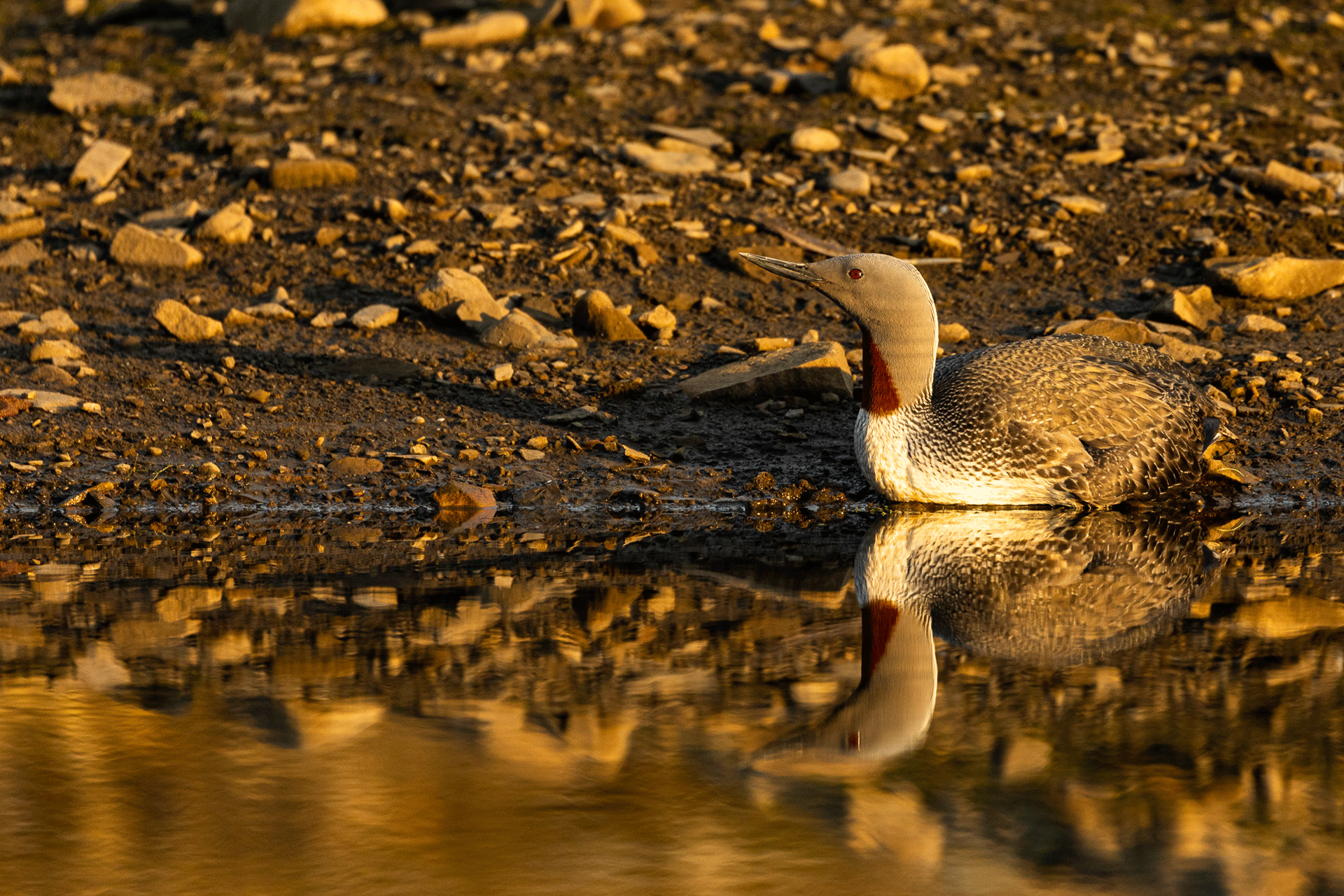
A red-throated diver resting at the edge of a pond under the Midnight Sun in Svalbard, captured during the endless bright season and reflected in still water as it blends seamlessly into the surrounding rocky landscape. Photo by Laia Sole.
Image Settings: Canon EOS 5D Mark IV camera, 400mm, ISO 800, f/5.6, 1/1250 and Gitzo Mountaineer Series 2 tripod.
How to Capture the Northern Lights
Nature photographer and Arctic guide Laia Soler Iglesias, based in Svalbard, thrives in extreme environments. Her images are shaped by patient observation and long stretches spent outdoors across the seasons.
“Working in these environments requires the ability to read conditions rather than impose expectations. Technique always serves the story in my work, not the other way around,” says Laia.
Using it allowed me to stay completely still, observe the subtle changes in the sky, and respond deliberately rather than rushing decisions. It reinforced for me how important it is to slow down, let time and conditions shape the photograph, and embrace the waiting while remaining ready for those brief bursts of activity.”
Speaking about capturing the Northern Lights, she adds, “Northern lights photography often involves long periods of waiting, with no guarantee that conditions will align. This image came together by committing to the location and staying present as the aurora slowly built. A tripod becomes essential in situations like this, for long exposures, low light, and strong wind. I’ve been using a Gitzo Mountaineer Series 2 for the past three years.
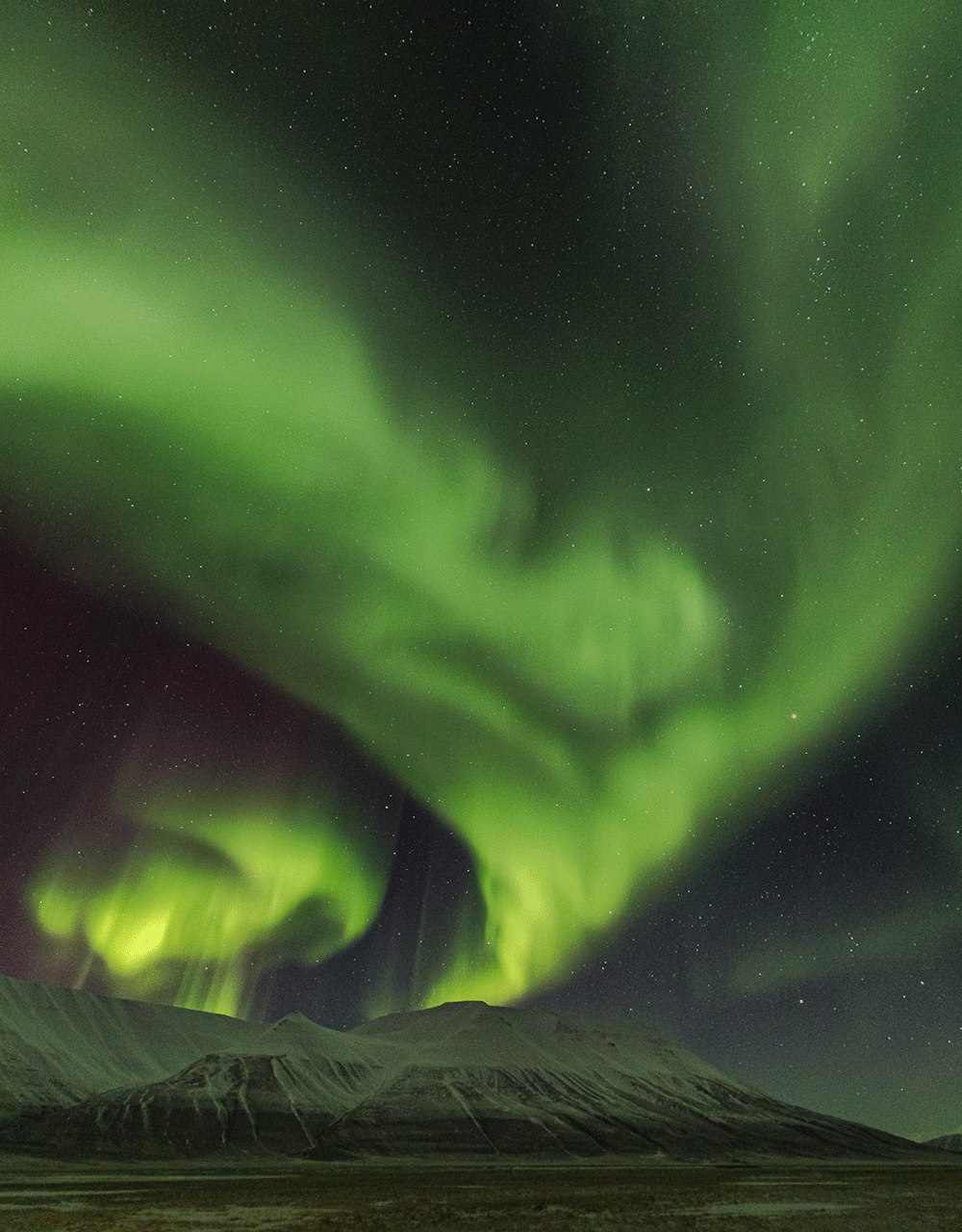
A vertical northern lights scene in Svalbard, with strong green auroral activity above partially snow-covered mountains and a riverbed in the foreground. Photo by Laia Sole.
Image Settings: Canon EOS 5D Mark IV camera, 16mm, ISO 3200, f/4, 6s and Gitzo Mountaineer Series 2 tripod.
Using imagery to Inspire Protection
Julia Westergren, a wildlife conservation photographer, nature guide and biologist based in Sweden, uses photography as a tool for protection.
“Much of my work has focused on the critically endangered southern dunlin,” she says. “Over the years, I’ve followed the people dedicating their lives to saving them, documenting the birds from eggs to their release. It’s a story of hope, but also of how fragile survival can be.”
For Julia, getting the shot means choosing techniques that serve the story. “Whether it’s flash, long exposure or alternative lighting like UV, technique is never the goal. It’s a way to translate atmosphere and emotion that conventional methods can’t always convey.”
That same approach guides her closer to home. In the heart of Stockholm, she photographed a male Mergus merganser using a slow shutter and her Gitzo Traveller tripod to create a more interpretive frame.
“It was the colors that first drew me in,” she explains. “Rather than freezing the scene, I moved with it. Reflections stretched and blended, solid shapes dissolving into flowing color. Sometimes an image isn’t about capturing exactly what you see, but about interpreting what you feel, and that moment can be closer than you think.”
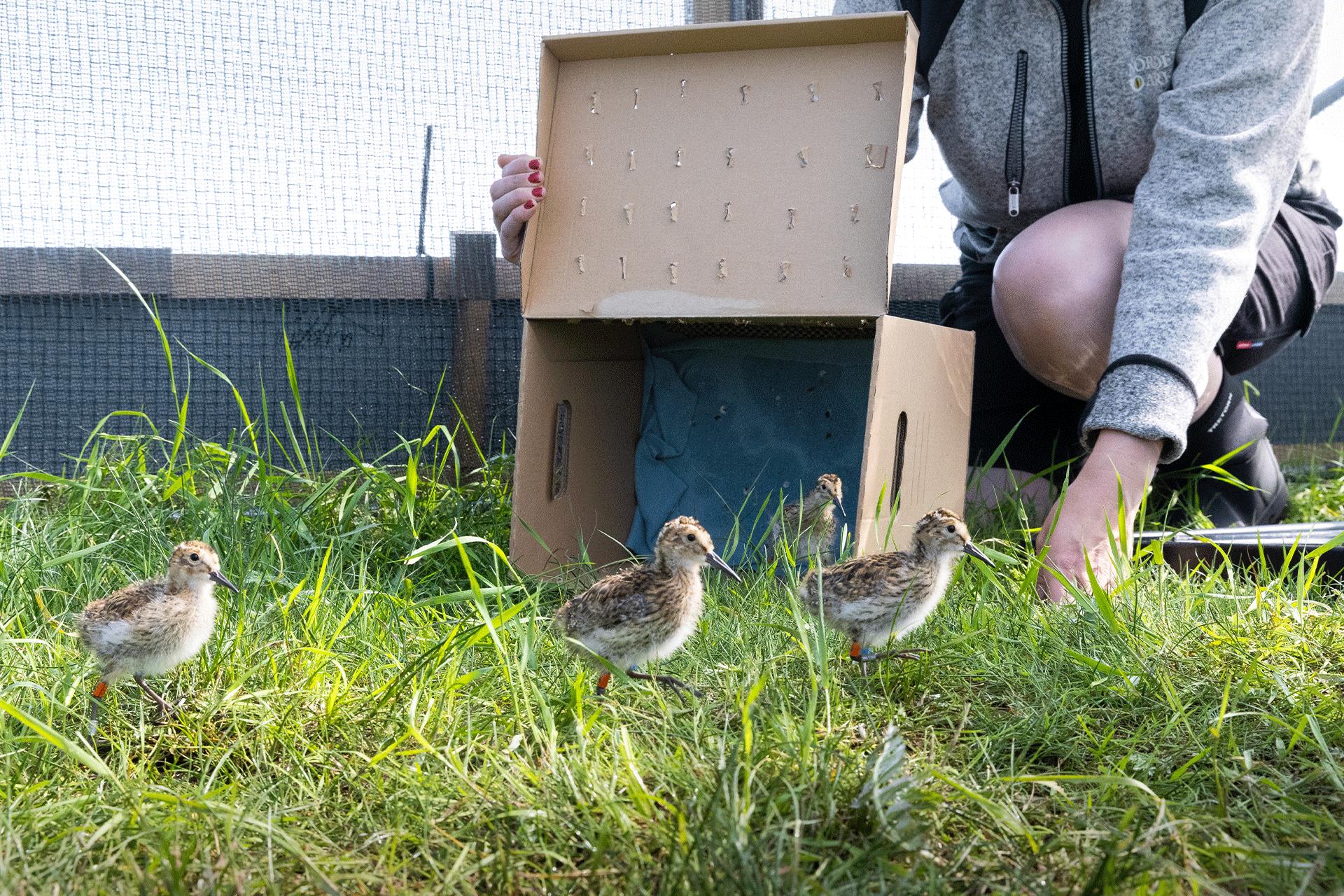
Four critically endangered southern dunlin juveniles are carefully released into an aviary monitoring pen, giving them a vital chance to grow stronger before their return to the wild. Photo by Julia Westergren.
Image Settings: Canon R8 camera, EF 24-70 mm Canon lens (with an adapter), 24mm, f8, 1/500, ISO 100.
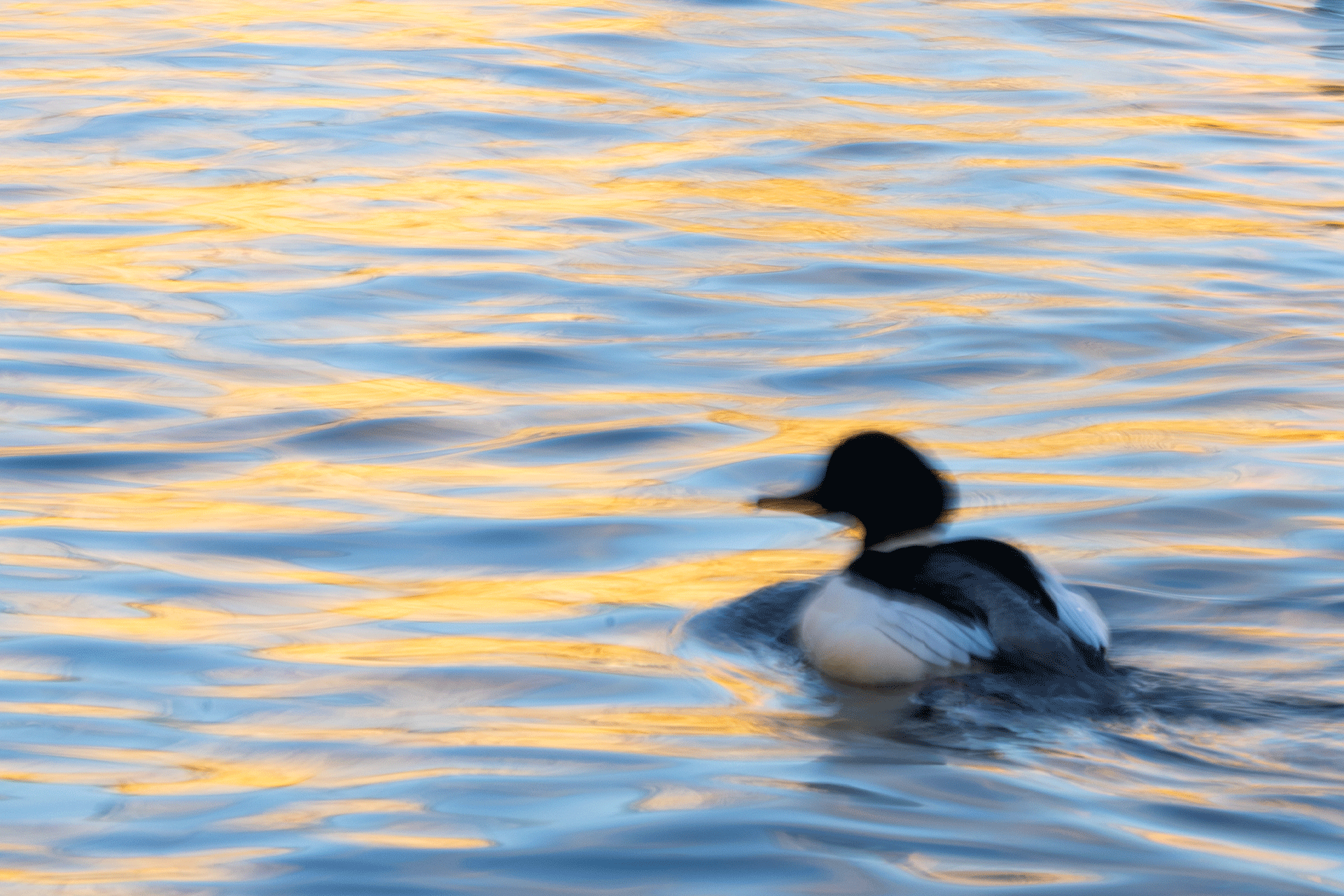
A male Mergus merganser photographed in central Stockholm using a slow shutter technique to transform the city’s reflections into flowing colour. Photo by Julia Westergren.
Image Settings: Canon R8 camera, RF 70-200 mm lens, 128mm, f22, 1 / 8, ISO 100, and Gitzo traveler tripod.
That same approach guides her closer to home. In the heart of Stockholm, she photographed a male Mergus merganser using a slow shutter and her Gitzo Traveller tripod to create a more interpretive frame.
“It was the colors that first drew me in,” she explains. “Rather than freezing the scene, I moved with it. Reflections stretched and blended, solid shapes dissolving into flowing color. Sometimes an image isn’t about capturing exactly what you see, but about interpreting what you feel, and that moment can be closer than you think.”
Capturing the Arctic's Resilience
Wildlife filmmaker and photographer Aztrid Novillo, originally from Ecuador, followed her curiosity and love for cold environments to live in the Svalbard archipelago.
“My passion for photography and filmmaking truly began when I met a very inspiring blue morph Arctic fox in Svalbard, whom I lovingly call Azul,” Aztrid says. “This small yet resilient creature completely changed my perspective and became my main inspiration for documenting Arctic wildlife thriving in extreme conditions.”
In harsh environments, gear is everything. Reflecting on photographing one of the Arctic’s most iconic animals, the polar bear, Aztrid recalls: “Almost two years ago, I crossed paths with this remarkable creature. I captured the image from a RIB boat using a 600mm telephoto lens. It was incredible to document this moment with such clarity while maintaining a safe and legal distance. Watching him rest on the iceberg after a hunt, his gaze deep and contemplative, was unforgettable.”
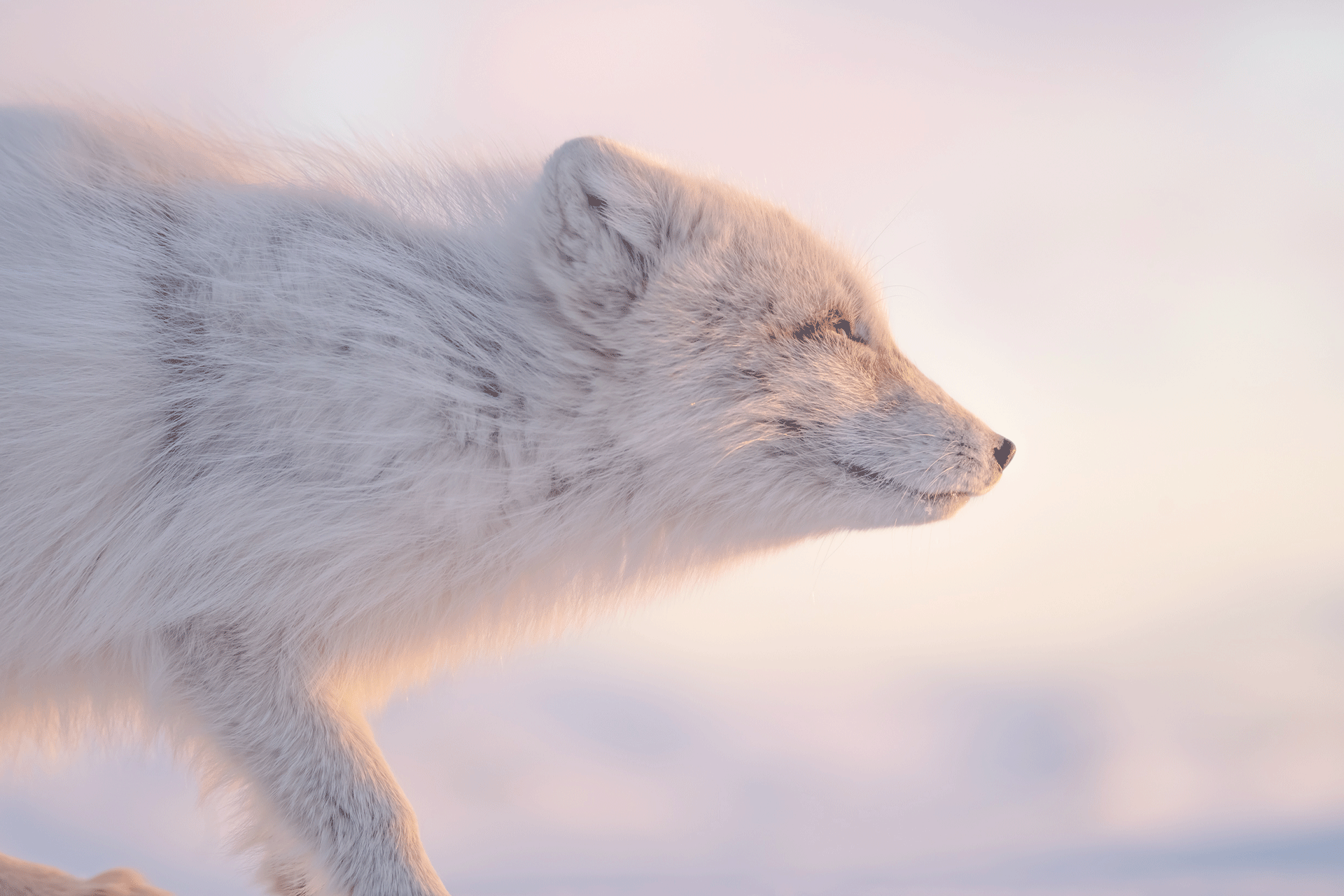
An Arctic fox in Svalbard, captured beneath the midnight sun as it navigates its icy mountain home. Photo by Aztrid Novillo.
Image Settings: Sony Alpha 7 III camera, Sony 200–600 mm, 1/500, ISO 800, f/5.8 and Gitzo Systematic tripod (Series 5) paired with a Gitzo fluid head.
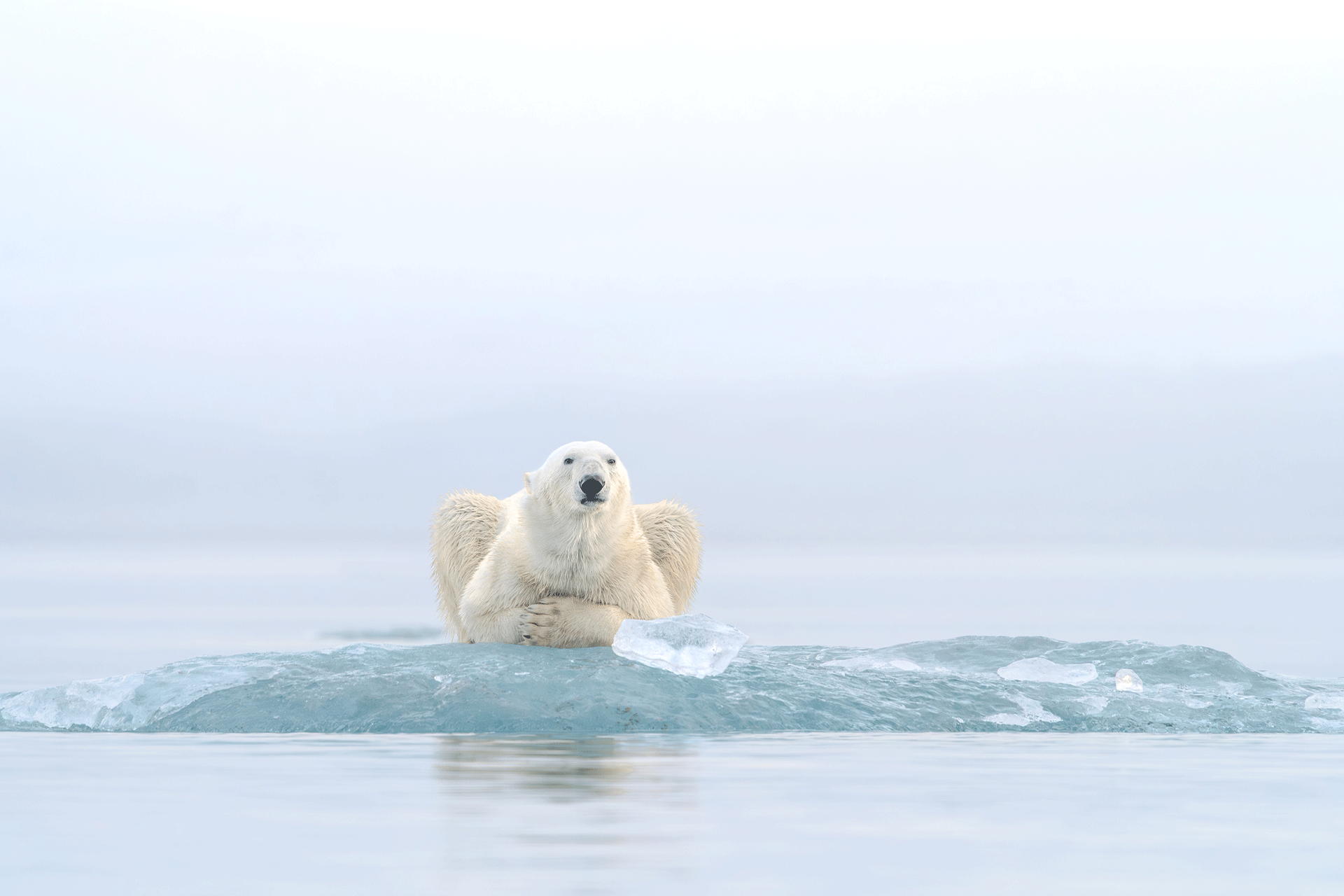
A polar bear resting on an iceberg in Svalbard after a successful hunt, photographed from a RIB boat at a safe and legal distance. Photo by Aztrid Novillo.
Image Settings: Sony Alpha 7 III camera, Sony 200–600 mm, 1/400, ISO 320, 600mm, f/6.3 and Gitzo Systematic tripod (Series 5) paired with a Gitzo fluid head.
“For this shot, I relied on my Gitzo Systematic Series 5 tripod paired with a Gitzo fluid head. It gives me the flexibility to move through Svalbard’s cold, harsh landscapes while capturing both stills and video of the wildlife around me.”
Her work is a reminder of the power of a single image to spark curiosity, inspire love, and drive protection. “Polar bears face immense challenges: shrinking territory, scarce food, climate change, and human pressure. My work is a tool to shine a spotlight on a creature on the brink.”
Technique and tools, from slow shutters to trusted Gitzo tripods, become extensions of a photographer’s vision, turning fleeting moments into stories that move, inspire, and provoke care. Every shot is a chance to connect people with the natural world, spark curiosity, and protect the species and places that need us most. With intention, photography doesn’t just capture a moment; it can change how we see, feel, and act for our planet.
About Girls Who Click
Girls Who Click is a nonprofit organization founded by Suzi Eszterhas, an award-winning wildlife photographer, that inspires and empowers girls to develop a lifelong passion for framing the natural world and protecting it. It partners with professional photographers worldwide to offer free workshops - both online and in person - for young women aged 13–18.
The global Ambassador Program pairs emerging creators with mentors and professional-grade photographic gear equipping young storytellers to make meaningful change through their cameras and their courage.
You can help to keep these vital programs free. Donate today to help a young person discover their power.
Michele's gear
To bring out the best in your wildlife photography expeditions, choosing the perfect equipment is crucial.
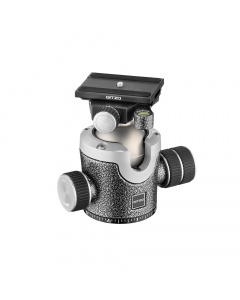 GH4383QD
Gitzo center Ball Head, Series 4 - Screw
| Weight | 0.9 kg |
| Base Diameter | 60 mm |
| Material | Aluminium |
| Front Tilt | -90° / +40° |
| Safety Payload UNI/PdR 105:2021 | 30 kg |
| Bubble Spirit Level (No.) | 1 |
| Plate Type | GS5370DR |
| Certifications | none |
| Colour | Noir Decor |
| Base Type | 54 mm |
| Ball Locking | Yes |
| Top Attachment | 1/4'' |
| Easy Link | No |
| Friction Control | Yes |
| Head Type | Ball Head |
| Independent Pan Lock | Yes |
| Independent Tilt Lock | Yes |
| Lateral Tilt | -90° / +40° |
| Maximum Working Temperature | 70 °C |
| Minimum Working Temperature | -30 °C |
| Pan Bar Included | No |
| Pan Drag | fluid cartridge with fixed drag |
| Panoramic Rotation | 360 ° |
| Quick Release | No |
| Tilt Drag | NONE |
| Working Height | 12.5 cm |
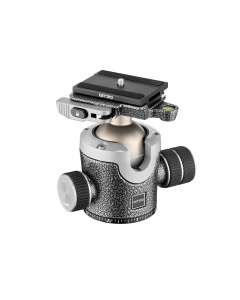 GH4383LR
Gitzo center Ball Head, Series 4 - Lever
| Weight | 0.9 kg |
| Base Diameter | 60 mm |
| Material | Aluminium |
| Front Tilt | -90° / +40° |
| Safety Payload UNI/PdR 105:2021 | 30 kg |
| Bubble Spirit Level (No.) | 1 |
| Plate Type | GS5370DR |
| Certifications | none |
| Colour | Noir Decor |
| Base Type | 54 mm |
| Ball Locking | Yes |
| Top Attachment | 1/4'' |
| Easy Link | No |
| Friction Control | Yes |
| Head Type | Ball Head |
| Independent Pan Lock | Yes |
| Independent Tilt Lock | Yes |
| Lateral Tilt | -90° / +40° |
| Maximum Working Temperature | 70 °C |
| Minimum Working Temperature | -30 °C |
| Pan Bar Included | No |
| Pan Drag | fluid cartridge with fixed drag |
| Panoramic Rotation | 360 ° |
| Quick Release | Yes |
| Tilt Drag | NONE |
| Working Height | 12.5 cm |
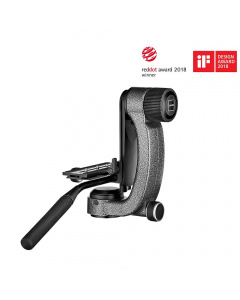 GHFG1
GHFG1
Gimbal Fluid Head
| Weight | 1.35 kg |
| Base Diameter | 60 mm |
| Material | Aluminium, Magnesium |
| Front Tilt | -180° / +180° |
| Safety Payload UNI/PdR 105:2021 | 8 kg |
| Plate Type | quick release - with 1/4″ screw |
| Colour | Black/Noir Decor |
| Top Attachment | 1/4″ screw, 3/8″ screw |
| Easy Link | No |
| Friction Control | No |
| Head Type | Other |
| Independent Pan Lock | Yes |
| Independent Tilt Lock | Yes |
| Maximum Working Temperature | 70 °C |
| Minimum Working Temperature | -20 °C |
| Pan Bar Included | Yes |
| Pan Drag | 1 step plus variable PTFE friction |
| Panoramic Rotation | 360 ° |
| Quick Release | Yes |
| Tilt Drag | fluid cartridge with fixed drag |
Ball Head Series 4 & Fluid Gimbal Head
The Gitzo Ball Head Series 4 provides versatility and precision.
Its quick-release system allows for easy mounting and adjustments, ensuring you never miss a frame. On the other hand, the Gitzo Gimbal Fluid Head offers exceptional stability and fluid movements, allowing you to effortlessly track the bear's motions while maintaining a steady frame. Its smooth panning and tilting capabilities make it ideal for capturing unexpected wildlife moments.
About Michele
Michele was born in 1996, in Orvieto and grew up in a small town located on the border between Umbria, Lazio, and Tuscany. Since he was a child, he was always fascinated by the natural environment and continues to dedicate his photographic life to it every day. For several years now Michele has been observing nature through his camera with the aim of sharing his story to others who connect with his photographs. All of Michele’s photographs have a personal style that often resembles a "dreamlike" vision of nature. Michele can express his vision by anticipating the right moment, scene, light, and arrangement of the composition to achieve the perfect shot.